
A water softener can help with laundry when a hardness test confirms that your washing machine is receiving hard water. You do not need a special washing machine with a built-in softener: a properly installed ion-exchange softener treats the incoming household supply.
If your laundry is the only concern, start with the correct detergent and dose for your water, load size and washer. Laundry water-softening additives are another option where the product label and washer manual permit them. They treat the wash load rather than supplying soft water throughout your home.
How Hard Water Affects a Washing Machine
Hard water contains dissolved calcium and magnesium. These minerals can interfere with washing and contribute to deposits. When hard water is heated, mineral scale can form on surfaces; over time, buildup may affect equipment performance. The effect depends on hardness, temperature, detergent and maintenance.

Rust is not a hardness test. Brown staining or corrosion needs its own diagnosis; do not assume that buying a softener will fix every washer problem. Test the water and follow the appliance manufacturer’s maintenance instructions.
Laundry can feel stiff or retain residue when washing conditions are unsuitable. Hardness may contribute, but excess detergent, overloading, the wrong cycle and poor rinsing can also affect results. Check these before investing in treatment equipment.
Using Water Softener for Washing Machine
There are two practical approaches, with different costs and coverage:
- Install a whole-house ion-exchange softener to remove hardness from the supply serving your washer.
- Adjust your laundry routine and, if appropriate, use a laundry water-softening additive for individual loads.
Purchase a Whole House Water Softener
A whole-house softener makes most sense when tested hardness is causing problems at several fixtures, not just in the laundry. Salt-based ion exchange removes calcium and magnesium by exchanging them for sodium or potassium ions. A plumber should confirm that both the washer’s hot and cold supplies are served by the treated plumbing.
One option to compare is the Kind S-650 salt-based softener. It removes hardness minerals and can serve a household water supply. Confirm sizing against your measured hardness, daily water use and peak flow, along with usable grain capacity, installation costs, salt refills and regeneration drainage.
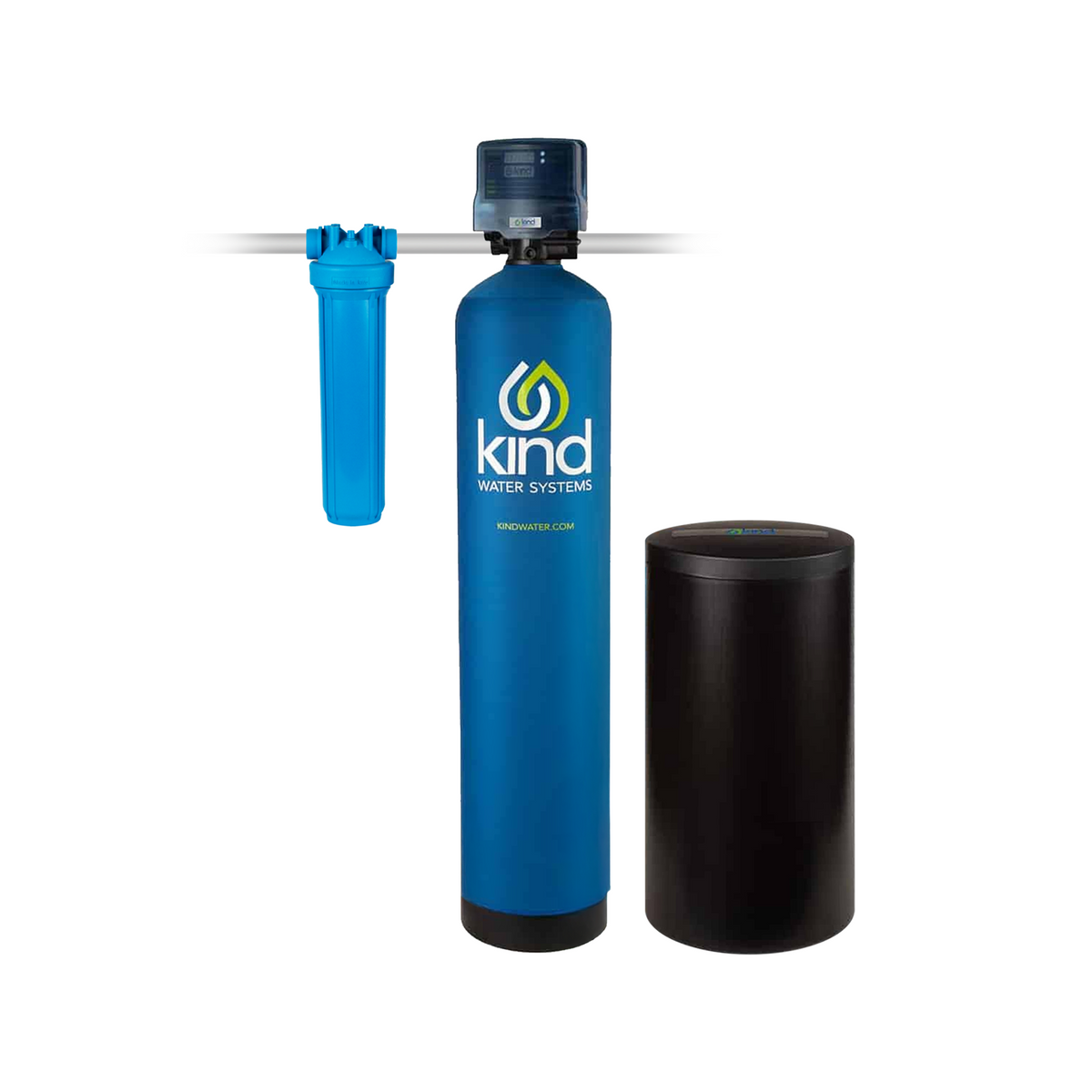
A whole-house option for confirmed hardness, subject to water chemistry and sizing.
Check Kind S-650 specifications and priceCheck feed-water limits first. Kind currently specifies a maximum of 0 mg/L for iron, manganese and hydrogen sulfide for this model. Do not select it for untreated water containing those substances; have any necessary pretreatment designed first. A softener is not a complete drinking-water safety treatment.
Compare other systems and local installation quotes in our whole-house water softener guide. Choose on water chemistry, capacity, service and total cost rather than a promised percentage reduction in detergent use.
A salt-free conditioner is different. Systems marketed as salt-free water softeners may help control scale, but they leave calcium and magnesium in the water. They do not provide the same mineral removal as ion exchange and should not be presented as an equivalent way to supply soft water for laundry.
Water Softener Tablets for Washing Machine
For renters or households that do not need whole-house treatment, a laundry water-softening additive can be a lower upfront-cost option. First use the detergent type your washer requires, including HE detergent for an HE machine, and measure the dose recommended for your water hardness, load size and soil level.
Laundry additives sold as water-softening tablets are formulated wash products, not ordinary water-softener salt. Calgon, for example, instructs users of its current UK 4-in-1 tablets to use them alongside laundry detergent. Check the exact product sold in your country and follow its label and your washer manual; formulas and directions vary.
Do not pour softener regeneration salt into the washing machine. Fabric softener, laundry water-softening additives and washer-cleaning products also serve different purposes. A tablet used during a wash does not soften the water at other taps or necessarily treat every rinse.
Benefits of Soft Water on Clothes
Removing hardness can help detergent work effectively and reduce hardness-related residue. It may improve the feel and appearance of laundry where hard water was contributing to the problem, but it cannot guarantee brighter clothes, longer fabric life or a fixed detergent saving.
Recheck detergent dosing after installing a softener. Whirlpool notes that very soft water may require less detergent and that excessive detergent can cause suds and poor cleaning. Follow the washer and detergent instructions rather than applying a blanket 40% reduction.
Conclusion
A whole-house ion-exchange softener is the option that removes hardness before water reaches your washing machine. Choose it when testing and household needs justify the equipment, installation and upkeep. Compare suitable models rather than treating one system as right for every home.
For a laundry-only problem, start with detergent dosing, loading, cycles and washer maintenance. Consider a compatible laundry water-softening additive if needed. Salt-free conditioning is a scale-control choice, not an equivalent source of soft laundry water.
Sources: USGS hardness guidance, Whirlpool laundry troubleshooting, Calgon tablet directions, Kind S-650 specifications and Kind softening and conditioning FAQ.
