
Compare whole-house filter and softener combinations by the result you need: actual hardness removal, salt-free scale control, or treatment for a tested well-water problem. This shortlist covers Kind, Pentair, Aquasana and EcoWater, with different installation, servicing and maintenance arrangements.
For city-water filtration plus hardness removal, compare Kind E-4000 with Pentair PAC and an appropriately specified EcoWater refiner. For filtration plus salt-free scale control, compare Kind E-3000 with Aquasana Rhino and its conditioner. For well-water iron issues plus hardness, consider a tested, supplier-approved arrangement such as Kind WS-5500.
A carbon filter does not automatically remove lead or arsenic, and a salt-free conditioner does not remove calcium and magnesium. Select the technology first, then compare systems that address the same goal.
This is a comparison of manufacturer documentation and practical purchasing requirements, not a hands-on performance shoot-out. The shortlist represents different buying and treatment options; it is not an exhaustive market ranking. WaterDefense may earn a commission through some product links. Affiliate availability does not determine whether a credible alternative belongs here.
Filter and Softener Combos Compared
| Option | Treatment goal | Why compare it | Main tradeoff |
|---|---|---|---|
| Kind E-4000 | City-water filtration and hardness removal | Online salt-based package with separate filtration | Confirm usable capacity, installation and local service |
| Pentair PAC4 / PAC7 | City-water carbon filtration and hardness removal | Another salt-based, separate-tank package | Obtain current equipment availability and installed quote |
| EcoWater refiner | Specified municipal filtration and hardness removal | Dealer assessment, installation and service | Exact model and local proposal determine cost and performance |
| Kind E-3000 | City-water filtration and salt-free scale control | Compact wall-mounted cartridge arrangement | Minerals remain; cartridges require maintenance |
| Aquasana Rhino + conditioner | Chlorine filtration and salt-free scale control | Tank-based alternative with published filter data | Minerals remain; 7 GPM filter rating needs checking against demand |
| Kind WS-5500 | Qualified well-water iron treatment and hardness removal | Dedicated iron treatment ahead of salt-based softening | Water chemistry, backwash flow and drainage must qualify |
Compare E-4000, Pentair PAC and EcoWater for actual city-water softening. Compare E-3000 and Rhino for salt-free conditioning. The well-water arrangement serves a different need and should not be declared better merely because it has more stages.
Kind E-4000: City-Water Filtration and Salt-Based Softening
City-water option for actual hardness removal
Kind E-4000

- Supply: Suitable municipal water
- Treatment: Sediment and carbon filtration plus salt-based softening
- Published maximum flow: Up to 12 GPM
- Ownership: Salt refills, regeneration and filter maintenance
The E-4000 combines filtration for household water-quality goals with an ion-exchange softener for hardness removal. Compare it with Pentair PAC and an EcoWater refiner when you want softened water rather than scale conditioning.
Obtain usable grain capacity at the recommended salt dose and suitable service-flow data. Ask how much pressure loss to expect with several fixtures running and whether the carbon stage meets your specific filtration goal, particularly if the utility uses chloramine.
Kind lists zero feed-water allowance for iron, manganese and hydrogen sulfide. Confirm your supply meets the operating requirements and read the installation manual. Compare the full installed cost, replacement filters, salt and service support before ordering.
Pentair PAC4 / PAC7: Another Salt-Based Filter and Softener Package
The Pentair PAC series combines sediment filtration, carbon filtration and a salt-based softener. It is a relevant comparison with E-4000 when the goal is city-water chlorine taste and odor reduction plus hardness removal, rather than salt-free scale control.
Pentair positions PAC4 for one to three bathrooms and PAC7 for four to six. The linked specification sheet describes separate carbon and softener tanks. Treat the bathroom categories as a starting point; request usable capacity, rated service flow, pressure loss and current availability for the proposed configuration.
Why choose it over E-4000? Consider Pentair when a suitable local installer offers a stronger complete proposal or parts and service arrangement. Do not assume the brand alone makes it better. Compare the same hardness load and peak demand, installed price, carbon maintenance and salt use.
Main tradeoff: Allow space and drainage for the tank arrangement and obtain an itemized quote. Carbon taste-and-odor treatment does not establish removal of every chemical or metal. Pentair’s documentation distinguishes softener performance certification from carbon-component material-safety claims.
Kind E-3000: City-Water Filtration and Salt-Free Conditioning
Salt-free scale-control alternative for city water
Kind E-3000
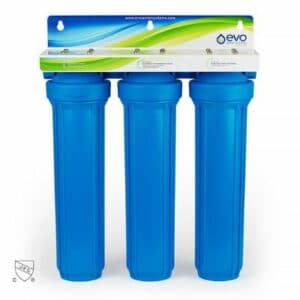
- Supply: Suitable city water
- Stages: Sediment filter, carbon block and salt-free conditioning
- Published flow: 15 GPM; confirm pressure drop at your demand
- Important: Leaves hardness minerals in the water
The E-3000 is a compact wall-mounted alternative when you want filtration and scale control without a brine tank. Its conditioning stage aims to reduce scale formation rather than remove calcium and magnesium. Hardness tests will still detect those minerals.
Kind’s current product information recommends replacing the sediment and carbon cartridges every 6–12 months, depending on water quality, and the ESOFT conditioning cartridge every 3–5 years. Confirm the schedule for your supplied equipment and price all replacement cartridges before buying. Salt-free means no salt refills or brine regeneration; it does not mean maintenance-free or zero ongoing cost.
This model is designed for city water. If your well contains iron, manganese, sulfur or microbial concerns, use a well-specific assessment instead. Also request product-specific performance evidence for any health-related contaminant you need treated; a broad carbon-media list is not proof of every removal claim.
Aquasana Rhino With Salt-Free Conditioner: Tank-Based Alternative
Compare with E-3000 for filtration and scale control
Aquasana Rhino + Salt-Free Water Conditioner

- Hardness treatment: Salt-free conditioning; minerals remain
- Filter evidence: Published chlorine-reduction performance sheet
- WH-1000 filter rating: 7 GPM; do not substitute a different Rhino model’s flow
- Buying check: Verify the bundle includes the conditioner
Rhino with its conditioner is a meaningful alternative to E-3000 for chlorine-treated water when scale control is the goal. It uses a tank-based filtration arrangement rather than Kind’s compact wall-mounted cartridges. It does not provide salt-based hardness removal.
The WH-1000 filter data sheet lists a 7 GPM rated flow and a 1,000,000-gallon filter capacity. These figures describe the filter, not a guarantee that every component in the bundle lasts ten years. Confirm conditioner, prefilter and postfilter schedules and pressure loss for the complete arrangement.
Why choose it over E-3000? Consider its documented chlorine-filter performance and tank format against Kind’s compact layout and cartridge costs. Main tradeoff: assess space, service flow and maintenance. The cited sheet covers free chlorine; it does not establish chloramine, lead or PFAS removal. Select appropriate treatment if those are your concerns.
Kind WS-5500: Well-Water Iron Treatment and Salt-Based Softening
Conditional well-water option for iron issues plus hardness
Kind WS-5500

- Supply: Tested well water within operating limits
- Stages: Spin-down and sediment filters, air-injection iron filter and salt-based softener
- Published maximum flow: Up to 12 GPM
- Required: Adequate pump flow and drainage for backwashing
The WS-5500 includes dedicated iron treatment ahead of salt-based softening. Consider it when a lab analysis confirms the relevant contaminants and hardness, and the supplier approves the arrangement for your well.
Its published feed-water limits include iron up to 7 mg/L, manganese up to 1 mg/L, hydrogen sulfide up to 1 mg/L and pH 6.5–9.5. These are equipment limits, not drinking-water safety thresholds. Confirm suitability for the combination of results rather than assuming each maximum applies independently under all conditions.
Ask for the sustained backwash rate, drainage requirements, softener capacity and expected pressure drop through the complete system. This bundle is not a carbon-filter package and does not establish treatment for pathogens, nitrate, arsenic, tannins or every other well contaminant.
What if You Need Carbon Filtration on a Well?
Kind also offers the WS-6500 filter and salt-based softener combination. Its current specifications list no iron, manganese or hydrogen sulfide allowance. It should not be substituted for the WS-5500 when the untreated well contains those contaminants.
If both iron treatment and carbon filtration are justified, have the supplier design the full arrangement and identify the exact equipment in the quote. A package name such as “whole house” does not establish that it handles your entire water analysis.
EcoWater Refiners: Dealer-Installed Alternative
For homeowners who want an installed and serviced proposal
EcoWater Water Refiner
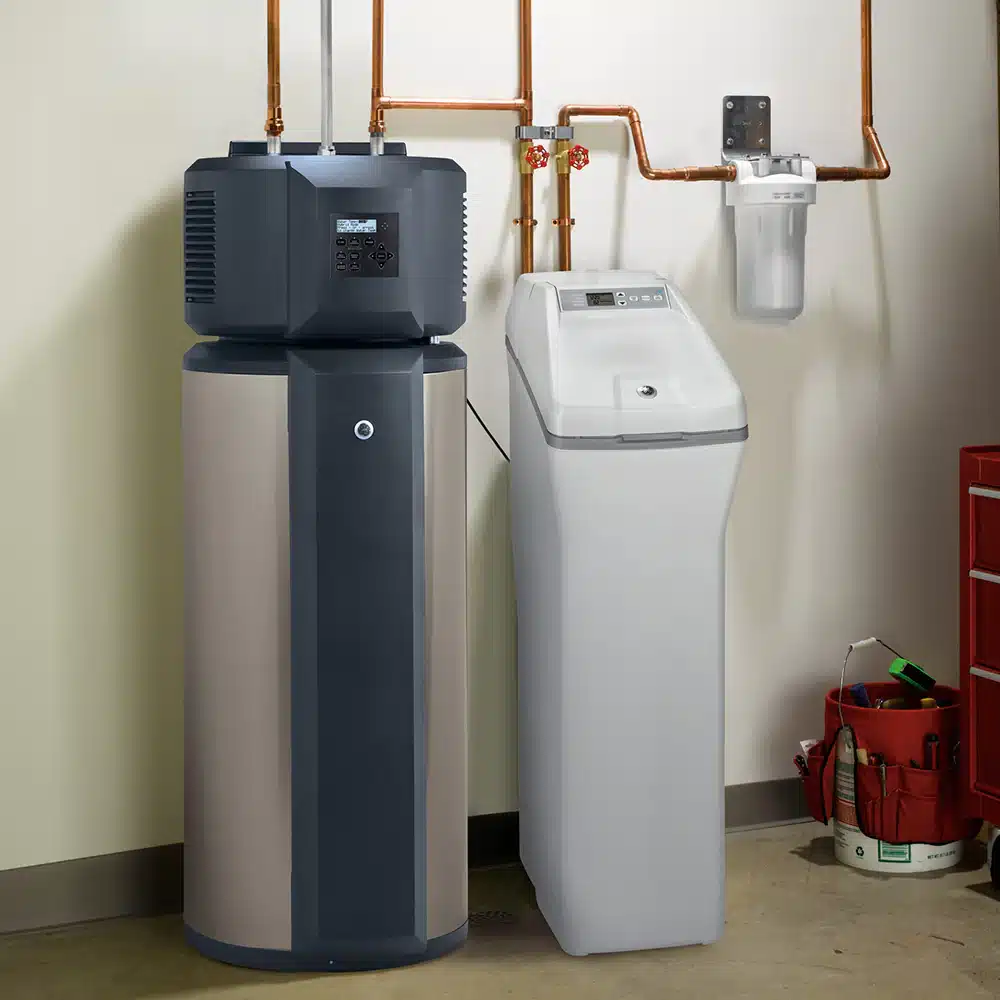
- Treatment: Salt-based softening plus model-specific carbon treatment
- Purchase route: Local dealer consultation and installed quote
- Compare: Capacity, service flow, media and service coverage
- Important: A refiner is different from an ordinary softener
EcoWater refiners provide another route to municipal-water filtration and hardness removal. The ERR3700 documentation describes chlorine taste-and-odor treatment; ERRC3702 uses catalytic carbon for chloramine and chlorine taste-and-odor treatment. Match the exact proposal to the disinfectant in your supply.
Why choose it over an online package? A dealer can assess, install and service the arrangement locally. Main tradeoff: pricing and service depend on that proposal. Compare the installed total and written warranty rather than assuming dealer equipment is always better, cheaper or more expensive.
Ask whether replacement media, labor and service visits are included and request model-specific performance documentation. A refiner label is not proof of lead, arsenic or PFAS removal. Our Costco EcoWater guide explains that buying route separately.
How to Choose the Right Combination
Start With the Water Supply
For city water, review the utility’s water-quality report and identify whether it uses chlorine or chloramine. Test hardness for sizing. A utility report does not capture every building-specific issue, such as contamination associated with household plumbing, so additional testing may be appropriate.
For a private well, obtain a laboratory analysis before buying equipment. Hardness, iron, manganese, pH, sediment and odor concerns affect the treatment design. Check microbial and other locally relevant testing needs with your health department; clear-looking water is not proof of safety.
Decide Whether You Want Hardness Removed
Salt-based ion exchange removes calcium and magnesium and regenerates using brine. Salt-free conditioning retains those minerals and aims to reduce scale. If actual hardness removal is the goal, compare salt-based models rather than treating the salt-free model as an equivalent replacement.
Match Filtration to Specific Contaminants
Sediment filters target particles. Carbon addresses particular taste, odor and chemical concerns, depending on the product and conditions. A softener addresses hardness. Each stage has a distinct job, and none should be assigned an unsupported list of contaminants.
For lead, arsenic, PFAS or another health-related concern, require model-specific testing or certification for the relevant reduction claim, along with rated capacity and flow. You may need dedicated whole-house treatment or a drinking-water system at the tap. Avoid assuming an ordinary filter-and-softener bundle handles all of them.
Check Capacity, Flow and Pressure
Hardness concentration in grains per gallon is different from a softener’s grain capacity. Daily gallons multiplied by hardness gives an initial daily hardness load. Ask for usable capacity at the salt setting you will use, including reserve, rather than selecting equipment by headline grain capacity alone.
Compare rated service flow, maximum flow and pressure loss separately. Multiple showers and appliances create peak demand. The highest flow number for one filter stage does not establish performance for the complete combination. A well also needs enough sustained flow to backwash any applicable filter.
What Does a Filter and Softener Combo Cost?
Compare current equipment prices and itemized installed quotes. The total depends on treatment stages, sizing, plumbing changes, drainage, electrical work, service access and commissioning. An installation kit does not make labor free or ensure the existing plumbing is suitable.
| Cost category | Include in your comparison |
|---|---|
| Equipment | Specified filters, softener or conditioner, tanks and any justified add-ons |
| Installation | Plumbing, bypass, drain arrangement, power, permits where applicable and startup |
| Routine operation | Salt, regeneration water, cartridges and any UV lamp or sleeve service |
| Long-term service | Media or resin replacement, valves, electronics, labor and shipping |
Request a three- or five-year ownership estimate using your hardness, water consumption and local costs. Compare what is included in each quote. A compact cartridge system and a backwashing tank system can have very different maintenance requirements.
Maintenance and Warranty Questions to Ask
- Which cartridges, media or resin need replacement, and at what usage or performance limit?
- How much salt and regeneration water will the selected settings use?
- Who provides local service and replacement parts?
- Which tanks, valves, electronics and consumables are covered, and is labor included?
- What conditions apply to returns, installation and warranty coverage?
- How should treated hardness and other relevant contaminants be checked after installation?
Some systems permit media or resin replacement without replacing the whole unit. Others use cartridges on defined schedules. Follow the actual manual; there is no universal rule that all filter media last for the life of the equipment or that salt is the only ongoing cost.
Do You Need a UV Add-On?
Kind E-3000UV adds a UV disinfection stage to the city-water E-3000 filtration and salt-free conditioning package. Choose the UV version for an identified disinfection requirement, rather than assuming an extra stage improves chemical filtration or hardness treatment. Unlike the standard E-3000, it requires electricity; include an accessible outlet, lamp replacement and sleeve maintenance in your installation and ownership budget. Neither model should be selected as a standalone treatment solution for an untreated private well.
UV is a disinfection stage, not a filter that removes dissolved chemicals or hardness. Its effectiveness depends on the correct dose, flow and incoming water quality. Iron, sediment and other conditions can interfere, so suitable pretreatment and maintenance matter.
Do not add UV solely because a bundle offers it. If testing or a qualified assessment establishes a microbial-treatment need, obtain a design with appropriate validated performance, lamp and sleeve maintenance, and a plan for outages or failures. UV does not replace correcting a contaminated well or following health-department advice.
Which Combo Should You Buy?
For actual city-water hardness removal, compare Kind E-4000, Pentair PAC and an appropriately specified EcoWater refiner. For salt-free filtration and scale control, compare Kind E-3000 with Aquasana Rhino plus conditioner. For a well, select a tested and correctly sized arrangement; Kind WS-5500 is an iron-treatment and softening option for qualifying conditions.
For a deeper comparison, see our home water softener guide and well-water softener guide.
Sources and Product Information
- Pentair PAC series: product and service route
- Pentair PAC4/PAC7: specifications and certification scope
- Aquasana Rhino with conditioner: product information
- Aquasana WH-1000: chlorine performance data
- EcoWater: softeners and refiners
- EcoWater ERR3700: specification sheet
- EcoWater ERRC3702: specification sheet
